

Introduction: Creating a DIY Craft Room That Works
Stepping into the world of DIY and crafts is an exhilarating journey—one where your creativity can truly shine. But whether you’re a total beginner or someone looking to upgrade their crafting experience, the foundation of your success often lies in the tools and setup of your workspace. A well-equipped craft room is more than just a space to store your supplies; it’s a hub for inspiration, productivity, and safety. Many new DIYers underestimate the importance of choosing the right tools and organizing them effectively. The right setup not only makes your projects easier and more enjoyable, but it also minimizes mistakes, saves time, and helps you avoid common safety pitfalls. In this comprehensive guide, we’ll walk you through everything you need to create a safe, efficient, and inspiring DIY craft room, focusing especially on essential tools, smart storage, and beginner-friendly equipment. Let’s turn your crafting aspirations into reality, with practical tips that will serve you for years to come.
Why Your Tool Selection Matters
The tools you select influence both the range and quality of projects you can tackle. Starting with the basics is vital—overspending on specialty items can clutter your space and overwhelm you. Conversely, skimping on foundational tools leads to frustration and can even risk your safety. Understanding what each tool does, and how it fits into your projects, ensures you invest wisely and build a toolkit that grows with your skills.
Core Categories: Breaking Down the Essentials
Every successful craft room covers a few core tool categories. Here’s what you should focus on as a beginner:
- Cutting Tools: For precision, safety, and versatility across materials.
- Measuring and Marking Tools: The backbone of accuracy.
- Adhesives and Fastening Tools: For assembling and finishing projects.
- Surface Preparation and Finishing Tools: For professional results.
- Organization and Storage Solutions: For efficiency and a clutter-free environment.
- Personal Safety Equipment: Non-negotiable for every DIYer.
Cutting Tools: The Workhorses of Crafting
Scissors: More Than Meets the Eye
Invest in at least two pairs: one for fabric, and another for paper or general use. Fabric scissors should be reserved for textiles only, as paper dulls the blades quickly. Choose ergonomic handles for comfort during long sessions.
Craft Knives and Rotary Cutters
Craft knives (like X-Acto or utility knives) are perfect for precision cutting—think stencils, models, or intricate paper crafts. Rotary cutters excel at straight, clean lines on fabric or paper. Always use a self-healing cutting mat underneath to protect both your tools and your workspace.
Saws for Small Projects
If you plan to work with wood or thick materials (e.g., foam board), a small hand saw or coping saw is invaluable. Look for beginner-friendly saws with comfortable grips and safety guards.
Measuring and Marking: Accuracy Equals Quality
Rulers and Measuring Tapes
A sturdy metal ruler (12″ or 18″) is a must for straight cuts and markings. Soft measuring tapes are essential for flexible materials. Consider a clear quilting ruler if you’ll do patchwork or precise layouts.
Marking Tools
Keep a selection: pencils (preferably mechanical for consistent lines), fabric marking pens (water soluble or disappearing ink), and tailor’s chalk. For wood or heavier materials, a fine-tip permanent marker is useful.
Adhesives and Fasteners: Holding It All Together
Glue Guns: Low-Temp vs. High-Temp
Hot glue guns are a crafter’s staple. Beginners should opt for a dual-temp model if possible. Low-temp is safer for delicate materials and hands, while high-temp is better for heavier or porous items.
Craft Glues
- PVA/White Glue: Versatile and budget-friendly for paper, card, and light wood.
- Fabric Glue: Flexible and washable for textile projects.
- Spray Adhesives: Fast, even coverage—great for collage and larger surfaces (always use with ventilation).
Tapes and Fasteners
- Double-sided tape for mounting and scrapbooking.
- Masking tape for temporary holding or layout planning.
- Safety pins and clips for fabric projects.
Surface Preparation and Finishing Tools
Sanding Blocks and Files
Even paper crafts benefit from light sanding to smooth edges. For wood, foam, or plastic, a basic set of sanding blocks and needle files is invaluable for professional results.
Paint Brushes and Applicators
Keep an assortment: fine-tipped brushes for detail, foam brushes for smooth finishes, and wide flat brushes for large areas. If you use stencils, sponge daubers help prevent paint bleed.
Cutting Mats and Protective Surfaces
Self-healing mats protect your table from cuts and glue spills. Choose a size that fits your workspace but is large enough for your typical projects.
Organization and Storage: Working Smarter, Not Harder
Storage Bins and Drawers
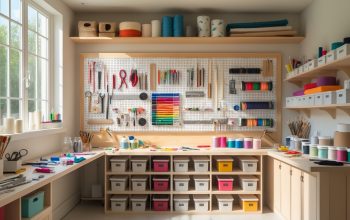
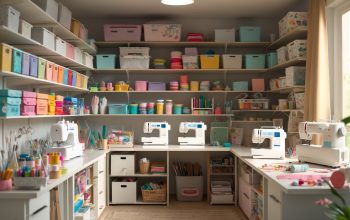
Labelled bins and stackable drawers save time and prevent lost supplies. Clear containers let you see contents at a glance. Use smaller bins for beads, buttons, and embellishments, and larger ones for fabric or papers.
Pegboards and Wall Storage
Pegboards keep frequently used tools within easy reach. Add hooks, baskets, and shelves to customize your setup as your collection grows. Magnetic strips are handy for scissors and metal rulers.
Portable Caddies
If space is limited or you craft in multiple areas, a rolling caddy or tote keeps essentials mobile and organized. Choose one with compartments for maximum efficiency.
Personal Safety Equipment: Don’t Skip This Step
Eye Protection
Safety goggles are a must for any task involving cutting, sanding, or spraying. Even basic hot glue work can spatter unexpectedly.
Respirators and Masks
When painting, spraying adhesives, or sanding, a simple dust mask or a rated respirator protects your lungs. Always work in a well-ventilated area.
Gloves and Aprons
Disposable nitrile gloves protect your hands from glue and dye. A sturdy apron shields your clothes from paint and debris.
Setting Up Your Craft Room: A Step-by-Step Approach
Step 1: Identify Your Main Crafting Activities
Are you mainly sewing, paper crafting, or woodworking? Tailor your tool selection to your interests. Start small and add as you go.
Step 2: Plan Your Layout
- Designate zones for cutting, assembly, storage, and finishing.
- Ensure there’s ample lighting and ventilation—natural light is ideal, supplemented by adjustable LED lamps.
- Keep your most-used tools within arm’s reach.
Step 3: Invest in a Quality Work Surface
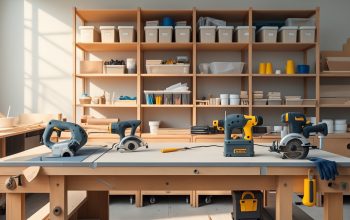
A sturdy table or bench is the heart of your craft room. Ensure it’s at a comfortable height and can withstand crafting activities. Protect it with a cutting mat or oilcloth.
Step 4: Install Storage and Organizers
Mount pegboards, set up bins and drawers, and label everything clearly. Store hazardous materials (glues, paints) out of reach of children and pets.
Step 5: Set Up for Safety
Keep safety equipment visible and accessible. Check that your workspace is free of trip hazards and clutter before you start any project.
Budgeting: Where to Spend, Where to Save
Invest in Quality for Core Tools
High-quality scissors, knives, and rulers pay for themselves in durability and precision. Cheap versions dull quickly and can pose safety risks.
Save on Consumables
Generic adhesives, tapes, and basic storage bins are often just as effective as brand-name options. Watch for sales and bulk deals.
Shop Secondhand
Thrift stores, online marketplaces, and crafting groups can be goldmines for gently used tools and furniture. Avoid secondhand items that can’t be sanitized, like cutting mats or fabric scissors.
Maintaining Your Tools and Workspace
Regular Cleaning
Wipe down tools after each use—glue, paint, and resin residue can ruin them. Launder aprons and wipe storage bins monthly.
Sharpen and Replace
Keep blades sharp with a honing tool or replace when dull. Check glue gun tips for buildup and clean according to manufacturer instructions.
Safety Checks
Inspect cords, plugs, and cutting mats for wear or damage. Replace immediately if any faults are found. Ensure ventilation and lighting remain adequate as your craft room evolves.
Common Mistakes Beginners Make—and How to Avoid Them
- Buying Too Much, Too Soon: Start with basics, then add tools as your skills grow.
- Neglecting Safety: Never skip eye protection or proper ventilation.
- Poor Organization: A cluttered space slows you down and increases risk of accidents.
- Ignoring Maintenance: Dull blades and dirty tools make crafting harder and less enjoyable.
Conclusion: Your Path to Crafting Confidence
Building your first DIY craft room is an investment in both your creative potential and your enjoyment of the process. By focusing on essential tools and smart organization, you set yourself up for a safer, more efficient, and ultimately more satisfying crafting experience. Remember, quality tools don’t have to mean breaking the bank—choose wisely, start with the basics, and allow your toolkit to evolve with your interests. Regular maintenance and a commitment to safety will protect not only your investment but also your well-being. Most importantly, let your space inspire you: a well-organized, equipped craft room is a canvas for every idea you want to bring to life. Whether you’re sewing, painting, building, or inventing, these foundational tips will help you avoid common pitfalls and maximize your creative joy. So roll up your sleeves, set up your space, and get ready to create—your dream craft room is just a thoughtful plan away.
I’m trying to avoid overspending and clutter, like you warned about with specialty items. Which measuring and marking tools would you say are the best to start with if I’m mainly doing paper crafts and simple woodworking?
For paper crafts and simple woodworking, stick with a good quality metal ruler (12-inch), a retractable measuring tape, a basic set square or combination square, and a sharp pencil for marking. These essentials will cover most of your measuring and marking needs without adding unnecessary clutter or expense.
If I start with the basics you described, is there a particular order or priority in which I should add more advanced tools as my DIY skills improve?
Once you’re comfortable with the basic tools, consider adding more advanced ones based on the projects you want to tackle next. For example, after mastering simple cutting and measuring tools, a rotary cutter or a glue gun could be your next step. Power tools like a drill or a mini saw can follow as you gain confidence. Let your crafting interests guide which tools you add and build up gradually as your skills grow.
How much time does it usually take to set up a well-organized craft room when starting from scratch? Is it realistic to finish the setup in a single weekend as a beginner?
For most beginners, setting up a well-organized craft room from scratch usually takes more than just a single weekend. Planning, purchasing supplies, assembling furniture, and arranging storage can take several days to a week, depending on the room size and how detailed you want the setup to be. It’s best to give yourself extra time to adjust and organize as you go.
Could you provide some examples of organization and storage solutions that work well in smaller craft rooms, especially for those with limited space?
For smaller craft rooms, try wall-mounted shelves or pegboards to utilize vertical space. Clear storage bins or drawer organizers keep supplies visible and tidy. Rolling carts are useful for moving materials around easily, and collapsible storage boxes can be tucked away when not in use. Consider over-the-door organizers for additional storage without taking up floor space.
You mention that the right setup can minimize mistakes and improve safety. Are there specific storage or organization tips you recommend for managing sharp cutting tools in a small craft room?
Absolutely, managing sharp cutting tools in a small space calls for careful organization. Use magnetic strips on the wall to keep scissors and blades out of reach yet accessible. Small, labeled containers or drawer organizers work well for rotary cutters and craft knives. Always store blades with their safety covers on, and consider a lockable box if children share the space.
Could you explain a bit more about surface preparation and finishing tools? I’m not sure what’s necessary for beginners versus what’s more advanced.
For beginners, basic surface preparation tools include sandpaper in a few grits, a sanding block, and a dusting brush to smooth and clean your materials. For finishing, simple paintbrushes, foam brushes, and non-toxic sealants are enough to start. More advanced options—like power sanders or spray finishes—can wait until you’re comfortable with the basics.
When it comes to organizing supplies, what smart storage solutions do you recommend for small spaces to keep things both accessible and safe, especially for those just starting out?
For small craft spaces, consider clear stackable bins or drawer organizers to keep supplies visible and separated. Pegboards with hooks can hold tools and materials without taking up counter space. Magnetic strips are great for sharp items like scissors, keeping them out of reach of children but easy to grab. Labeling containers also helps beginners quickly find what they need.