
Introduction: The Creative Clutter Dilemma
Every DIY crafter knows the struggle: an inspiring burst of creativity, followed by a workspace buried in supplies, half-finished projects, and a tangle of tools. Whether you’re working from a spacious basement or a cozy corner nook, a cluttered craft studio can stifle creativity, waste time, and even damage your materials. But with the right storage strategies, any space—no matter how small or oddly shaped—can become a highly functional, inspiring hub for your creative pursuits.
This in-depth guide is packed with practical DIY storage hacks designed specifically for craft studios. You’ll learn space-saving solutions for every type of supply, discover how to customize storage for your workflow, and get step-by-step instructions for clever, budget-friendly projects. Whether you’re a quilter, painter, woodworker, or multi-crafter, these ideas will help you reclaim your workspace, protect your tools, and spark your creativity every time you step into your studio.
Assessing Your Craft Studio: Know Your Space and Needs
Measure and Map
Before you invest time or money in storage solutions, take a close look at your space. Use a measuring tape to get accurate dimensions of your room, including ceiling height, wall lengths, and any alcoves or odd angles. Sketch a basic floor plan. Identify available wall space, underused corners, and the footprint of large furniture or equipment.
Inventory Your Supplies
Group your supplies into categories—fabrics, papers, paints, adhesives, tools, works-in-progress, etc. Estimate the volume of each category and note which items you use most frequently. This will help you prioritize storage accessibility and tailor solutions to your actual workflow.
Identify Workflow Bottlenecks
Take a week to note where clutter accumulates or where you lose time searching for materials. Common bottlenecks include tangled thread, misplaced small tools, or stacks of unfinished projects. Your goal is to design storage that addresses these pain points.
Vertical Solutions: Using Walls for Smart Storage
Pegboards: The Customizable Classic
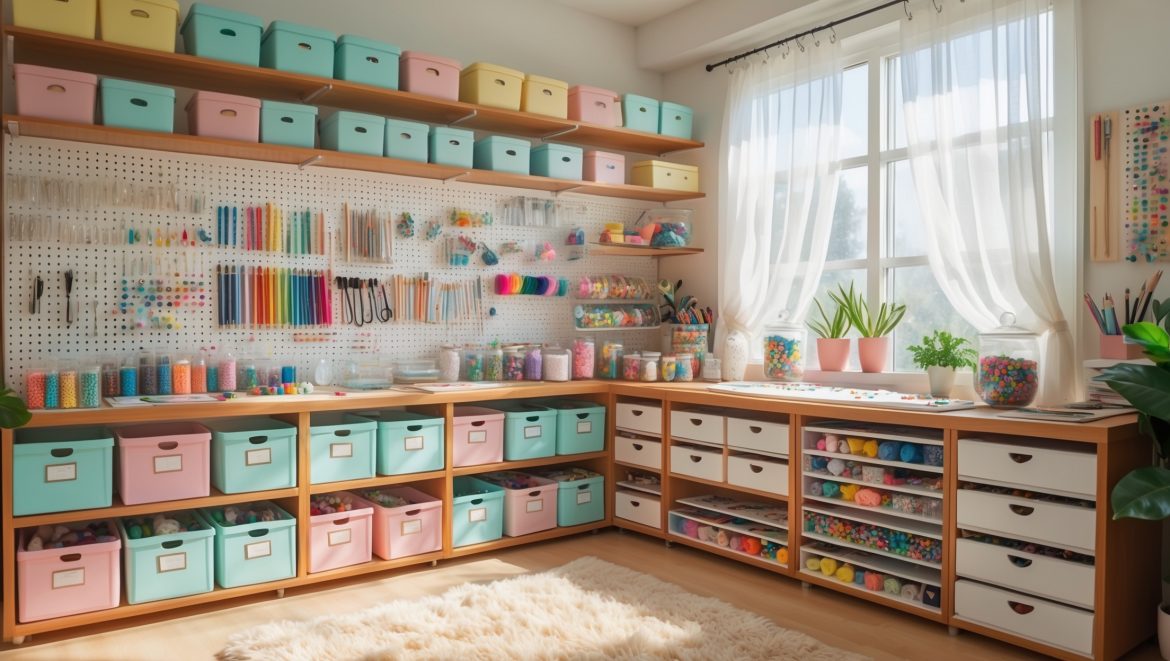
Pegboards are a game-changer for craft studios. Mount a sturdy pegboard on an open wall, and use a mix of hooks, baskets, and shelves to organize tools, scissors, rulers, and even small containers. Arrange items by frequency of use—the most-used tools at eye level, specialty items higher or lower. For extra flair, paint your pegboard to match your studio’s palette.
- DIY Tip: Add a frame around your pegboard for a finished look and to prevent warping.
- Storage Hack: Clip binder clips onto the pegboard to hang ribbons, washi tape, or patterns.
Open Shelving: Accessible and Flexible
Install open shelves above work tables or along unused walls. Deep shelves (10–14″) can hold bins, boxes, and bulk supplies. Use clear containers or label everything for instant identification. Adjustable shelves let you reconfigure as your storage needs change.
Wall-Mounted Rails and Rods
Mount curtain rods, tension rods, or kitchen rails for hanging baskets, buckets, or clips. This is ideal for storing threads, rolls of vinyl, or hanging tools. Magnetic knife strips can hold metal tools or scissors in easy reach.
Underutilized Spaces: Hidden Storage Opportunities
Under the Table: Drawers and Rolling Carts
If your worktable has open space underneath, add rolling drawer units or storage carts. These are perfect for storing heavy items like paper reams, glue guns, or power tools. Choose carts with locking wheels for stability.
Backs of Doors: Organizers and Racks
Install pocket organizers or shallow racks on the backs of doors. These can hold everything from paint tubes to fabric scraps or patterns. Use over-the-door hooks for aprons and tote bags.
Ceiling Storage
In high-ceilinged spaces, consider suspended shelves or racks for infrequently used items. Sturdy wire racks can be anchored to joists to hold lightweight bins or seasonal supplies.
Custom DIY Storage Projects for Crafters
1. Modular Cubby Shelves
Build or assemble modular cubby units to fit your space. These are ideal for sorting yarn, fabric fat quarters, or scrapbook paper by color or type. Use baskets or fabric bins inside cubbies for a tidy look.
- Materials: Plywood or MDF, wood glue, screws, paint or stain, optional baskets or bins.
- Steps: Cut boards to size, assemble in grid formation, secure with glue and screws, finish as desired.
2. DIY Thread and Ribbon Organizer
Create a wall-mounted rack using dowels spaced horizontally on a wooden board. Slide spools of thread or ribbon onto the dowels for easy access and visibility.
- Materials: Wooden board, wooden dowels, wood glue, mounting hardware.
- Steps: Drill holes in board, glue dowels in place, mount board to wall.
3. Fold-Down Workstation with Built-In Storage
For small spaces, build a fold-down desk with shallow shelves inside. Store paints, brushes, or sketchbooks on the shelves, and fold the desk up when not in use.
- Materials: Plywood, piano hinge, magnetic catch, shelf brackets, paint.
- Steps: Cut desk surface and side supports, attach shelves to back panel, mount to wall with hinges, add support brackets.
Organizing Small Supplies: Tiny Items, Big Solutions
Drawer Dividers and Trays
Use adjustable dividers or trays in drawers to sort beads, buttons, fasteners, and other tiny items. Repurpose ice cube trays, muffin tins, or jewelry organizers for inexpensive partitioning.
Magnetic Boards for Metal Bits
Mount a magnetic board above your workspace to hold pins, needles, bobbins, or small metal tools. Use magnetic spice containers for an extra layer of storage.
Clear Containers for Visibility
Store small embellishments in clear jars, stackable bins, or transparent craft boxes. Always label the outside for quick identification. For extra efficiency, group items by project or color family.
Organizing Large and Awkward Items
Vertical File Storage for Paper and Boards
Repurpose magazine racks or build vertical slots from plywood to store poster boards, cutting mats, or large paper sheets upright. This prevents warping and keeps materials accessible.
Rolling Bins for Fabric and Bulky Supplies
Store fabric, batting, or stuffing in rolling bins under your worktable. Use vacuum-seal bags for off-season fabric to save space and protect from dust.
Wall Hooks for Tools and Equipment
Install heavy-duty wall hooks for hanging cutting mats, rulers, or even power tools. For sewing machines or die-cutters, create a dedicated shelf with a sliding or lift-up mechanism for easy access and storage.
Labeling and Inventory Systems
Consistent Labeling
Use a label maker or printable labels to create clear, uniform tags for all bins, drawers, and shelves. Color-code by type or project for at-a-glance organization.
Inventory Apps and Trackers
Consider digital inventory tools or simple spreadsheets to keep track of your supplies, especially items you buy in bulk or use infrequently. This helps prevent overbuying and makes shopping lists a breeze.
Project Bins for Work-in-Progress
Dedicate labeled bins or trays for active projects. Store all related materials together so you can easily pick up where you left off, and quickly stash projects away to clear your workspace when needed.
Budget-Friendly Storage Hacks
Repurpose Household Items
- Mason jars: Store brushes, pens, or small tools.
- Recycled food containers: Great for beads, sequins, or hardware.
- Shoe organizers: Hang on doors for paint tubes or yarn skeins.
- CD racks: Store ribbon spools or thread cones.
DIY Drawer Inserts
Cut cardboard or foam core to fit inside drawers, then create custom compartments for supplies. This is an inexpensive way to keep everything tidy without buying new organizers.
Thrift and Dollar Store Finds
Browse thrift stores or dollar shops for baskets, bins, or trays. With a coat of paint or decorative paper, mismatched containers can become a cohesive, stylish storage system.
Maintaining Your Organization System
Regular Decluttering
Set aside time each month to purge materials you no longer use. Donate excess supplies to schools or local craft groups, and recycle unusable scraps. This keeps your storage system functional and your space inspiring.
Daily Reset Routine
Establish a five-minute cleanup ritual at the end of each crafting session. Return tools and supplies to their designated spots, and wipe down surfaces. Consistency is key to maintaining an efficient workspace.
Adapt and Refine
As your projects or interests evolve, revisit your storage systems. Don’t hesitate to rearrange, add, or remove storage solutions to better fit your changing needs. A flexible organization plan supports ongoing creativity and minimizes frustration.
Conclusion: Crafting a Studio That Inspires
Transforming a chaotic craft studio into a streamlined, organized workspace isn’t just about tidiness—it’s about unlocking your creative potential every time you step through the door. With smart storage hacks tailored to your supplies and space, you’ll waste less time searching and more time making. Your tools will last longer, your projects will progress smoothly, and your studio will become a place that energizes and motivates you.
Remember, there’s no one-size-fits-all solution. Start by addressing your biggest pain points, implement a few key storage upgrades, and build from there. Celebrate small wins—whether it’s a neatly labeled drawer or a pegboard that finally tames your tools. Let your organization system evolve as your creative journey unfolds.
Above all, craft a studio that reflects your personality and process. Every shelf, bin, and label should support your unique workflow and bring you closer to the joy of making. With these DIY storage hacks, you’ll turn any space into a studio that’s as inspiring as the projects you dream up within it.
When you mention measuring the studio and mapping out the floor plan, do you have any tips or tools for making this step easier, especially if the space has a weird layout or slanted walls?
For spaces with unusual layouts or slanted walls, try using a measuring tape and graph paper to sketch your room to scale, noting any angles or odd corners. Mobile apps like Magicplan or RoomScan can also help create accurate floor plans by letting you trace the space with your phone, which is great for irregular rooms.
You recommend mapping out available wall space and odd angles when planning storage. Do you have suggestions for making use of awkward alcoves or high ceilings in a small studio?
Absolutely! For awkward alcoves, consider custom shelving or cabinets that fit snugly into the space—these areas are great for storing supplies or displaying finished crafts. To use high ceilings, install vertical shelves or hanging storage systems. Tall pegboards or wall-mounted racks can also help you keep items accessible without taking up precious floor space.
Could you share more about strategies for organizing supplies that you only use occasionally, versus the ones you need to keep within easy reach? I’m not sure how to balance accessibility with decluttering.
For supplies you use often, store them in clear bins or open shelves near your main workspace so they’re always accessible. For items used occasionally, tuck them away in labeled boxes, drawers, or higher shelves. Group similar items together, and establish a routine to periodically review and rotate supplies based on what you’re currently using most.
You mention step-by-step instructions for budget-friendly storage projects. Can you give examples of some projects that are both cheap and durable? I’m worried about flimsy storage breaking with frequent use.
Absolutely! Some examples include creating sturdy storage cubes from reinforced cardboard boxes with glued-on fabric, building wall-mounted pegboards from plywood for hanging tools, and repurposing wooden crates for stackable shelving. These materials are not only affordable but also hold up well with daily use if properly assembled and reinforced.
If you’re customizing storage for your workflow, what’s the best way to keep works-in-progress visible so you don’t forget about them, without adding to the clutter?
To keep works-in-progress visible but tidy, try using clear bins or open shelving at eye level. Pegboards with labeled clips or baskets work well for hanging ongoing projects. Rotating trays or a dedicated project rack also let you see what’s in progress without cluttering your main workspace.
Are there any budget-friendly storage hacks for organizing messy supplies like thread and small tools, or do most effective solutions require buying special organizers?
You can definitely organize thread and small tools on a budget without buying special organizers. Repurpose items like glass jars, muffin tins, or ice cube trays for sorting small supplies. Cardboard boxes or shoe boxes can be covered with decorative paper for a tidy look. Pegboards made from inexpensive materials can also keep tools visible and accessible.
What storage hacks from your guide are most budget-friendly for someone just starting out with only basic tools? I want to make sure I don’t overspend on organization right away.
For a budget-friendly start, focus on upcycling items like jars, cans, and boxes for supply storage, as suggested in the article. Pegboards made from inexpensive materials can organize tools and supplies vertically. Shoe organizers or tension rods are also cost-effective options that don’t require advanced skills or big purchases.
I’m a little worried about sticking to a budget for some of these storage hacks. Are there DIY storage solutions in your guide that use mostly repurposed or inexpensive materials?
Yes, several storage hacks in the guide focus on using repurposed or low-cost materials. Ideas like reusing glass jars, tin cans, and old crates for organizing supplies are budget-friendly. You’ll also find tips for creating shelving from reclaimed wood and making drawer dividers from cardboard, so you can maximize storage without spending much.
After mapping out my space and sorting supplies, how long should I expect the process of implementing new storage solutions to take? I only have weekends free and don’t want to get overwhelmed.
If you’re working only on weekends, setting up new storage solutions can take anywhere from two to four weekends, depending on the size of your space and how complex your storage plans are. To avoid feeling overwhelmed, try breaking the project into smaller tasks, focusing on one area or supply type each weekend. This way, you can steadily make progress without it feeling like too much at once.
For someone on a tight budget, which of the storage hacks in your guide require the least investment but still offer noticeable improvements in organization?
Repurposing household items like jars, cans, and shoeboxes for storing supplies is the most budget-friendly option mentioned in the guide. Hanging organizers made from inexpensive materials, such as over-the-door shoe racks, also offer great organization without a big investment. Both of these hacks can make a noticeable difference while keeping costs low.
After mapping out my studio and taking inventory, what would be the very first step you recommend before I start building or buying any storage pieces?
Before you buy or build any storage, set clear priorities for how you want your studio to function. Decide which supplies you need most accessible versus those you use less often. This will help you choose storage solutions that truly fit your workflow and avoid unnecessary purchases.
Could you recommend some budget-friendly storage ideas specifically for bulky items like fabric rolls or large canvases? I’m having trouble finding options that don’t take up too much space or cost a lot.
For bulky items like fabric rolls, try using inexpensive wall-mounted hooks or tension rods to store them vertically and save floor space. For large canvases, repurpose an old bookshelf by removing some shelves to create vertical slots, or use a simple rolling laundry cart for easy access and mobility. Both options keep costs down and make the most of your available space.
If I frequently switch between different crafts, like quilting and painting, how can I set up storage that keeps everything organized but doesn’t slow me down when I move from one project type to another?
Consider using modular storage solutions like clear bins, rolling carts, or color-coded drawers for each craft. Store supplies for each activity together, so you can easily pull out just what you need. Label everything clearly, and keep your most-used items accessible. This way, when you switch from quilting to painting, you simply swap out the relevant bins or carts without reorganizing each time.
I’m interested in your suggestions for making use of awkward alcoves or tight corners. Could you give a specific example of a DIY storage hack that works well in those kinds of spaces?
One practical DIY idea for awkward alcoves or tight corners is to install floating corner shelves. These shelves can be custom-cut to fit the space, making use of vertical storage without taking up floor area. They’re great for holding jars of supplies, small baskets, or craft tools, turning even small, tricky spots into functional storage.
Could you share more about budget-friendly DIY storage ideas that actually work well for smaller studios or shared spaces? I want to maximize efficiency without spending a lot.
Absolutely! For smaller or shared studios, try using stackable clear bins or repurposed jars to keep supplies organized and visible. Pegboards are also affordable and can hold tools vertically, saving desk space. Wall-mounted shelves or cubbies above your work area help maximize vertical real estate without crowding your workspace. You can also repurpose shoe organizers for fabric or yarn storage—they hang easily and make use of unused door space.
I often lose track of unfinished projects and end up starting new ones instead. Do you have any specific tips for designing storage that keeps works-in-progress visible but organized, especially in small spaces?
To keep your unfinished projects visible and organized, consider using clear bins or open shelving labeled for works-in-progress. Wall-mounted racks or pegboards with clip-on baskets can also help display ongoing projects without taking up floor space. Rotating trays or tiered carts are great for moving projects around while keeping them accessible and tidy.
After identifying workflow bottlenecks, how often do you suggest reassessing and updating your storage setup to stay organized as your crafting habits or supply types change?
It’s a good idea to reassess your storage setup every few months, or at least seasonally, since crafting habits and supplies can shift over time. If you notice new bottlenecks or your projects change, make small adjustments right away. Regular, proactive tweaks help keep your space organized and efficient.
When you say to group supplies and estimate the volume, do you have any tips for measuring or keeping track of fabric versus smaller items like beads or pens?
For fabric, fold and stack it neatly, then measure the height and width of the stack to gauge how much shelf or bin space you’ll need. For smaller items like beads or pens, use clear containers or divided trays. Label each container, and when you add or use supplies, jot down quick notes in a small inventory notebook to keep track easily.
Could you expand more on how to customize storage for different crafts? I do both painting and quilting, so I’m curious how to combine storage for totally different kinds of supplies in one space.
Combining storage for painting and quilting works best if you create zones within your space. Use clear bins or drawers labeled for each craft, keeping paints, brushes, and canvases in one area, and fabrics, threads, and quilting tools in another. Shared items like rulers or cutting mats can go in a central spot. Adjustable shelving and modular organizers help you adapt as your needs change.
I love the idea of grouping supplies by frequency of use, but what storage hacks do you recommend for crafters who juggle multiple types of crafts with very different materials?
If you work with several types of crafts, try using clear bins or labeled drawers to separate materials for each craft. Modular shelving lets you reconfigure storage as your needs change. Rolling carts are also handy for keeping your current project close by, while less-used supplies can be stored higher up or further out of reach.