
Introduction
Setting up a DIY craft studio is a milestone for any creative enthusiast, but the real magic lies in crafting a layout that not only looks inviting but also supercharges your productivity. Too often, makers settle for a haphazard arrangement—scattering supplies in every corner, squeezing worktables wherever they fit, and losing precious time hunting for tools. A well-planned studio layout is far more than just aesthetics; it’s the backbone of an efficient, inspiring creative process. Whether you’re a hobbyist or building a side business, the way your space is organized will directly impact your workflow, the quality of your finished projects, and even your joy in making. In this comprehensive guide, we’ll dissect the core principles of craft studio layout design, explore workflow-based zoning, cover storage solutions that keep supplies at your fingertips, and walk through real-world examples. By the end, you’ll have a blueprint for a craft studio that’s tailored to your projects, space, and style—making every creative session smoother and more satisfying.
Understanding Workflow in Your Craft Studio
Why Workflow Matters
Workflow refers to the sequence of steps you take from the start to the finish of a project. A studio that supports a natural flow—without backtracking, tripping over clutter, or searching for materials—will make crafting easier, safer, and more enjoyable. Mapping your workflow is the first step to a purposeful layout.
Analyzing Your Creative Process
- Project Types: List the crafts you do most (e.g., sewing, painting, woodworking, jewelry making).
- Typical Steps: Break down the average process (idea/sketching, prep, assembly, finishing, cleanup).
- Tools & Materials: Note which supplies/tools you reach for in each phase.
Sketch a simple diagram of your steps and where they’d be best supported in your space. This becomes the foundation for your studio zones.
Core Studio Zones for Maximum Efficiency
Dividing your studio into functional zones streamlines your work. You don’t need a huge room—smart zoning works in compact spaces, too. Here are the most effective core zones:
1. Inspiration & Planning Zone
- Purpose: Brainstorming, sketching, design, pattern drafting.
- Key Features: Small desk or table, corkboard, inspiration wall, sketchbook storage, task lighting.
- Tips: Place near a window for natural light, keep clear of messy work areas.
2. Prep & Cutting Zone
- Purpose: Measuring, cutting fabric, wood, paper, prepping materials.
- Key Features: Large, sturdy table at a comfortable height, cutting mats, rulers, rotary cutters or saws, scrap bin.
- Tips: Allow enough clearance on all sides for moving large materials.
3. Assembly & Construction Zone
- Purpose: Putting projects together—sewing, gluing, nailing, painting.
- Key Features: Spacious work surface, easy access to hand tools, glue guns, clamps, sewing machines, or easels.
- Tips: Place near outlets for power tools; use adjustable stools or chairs for comfort during long sessions.
4. Finishing & Drying Zone
- Purpose: Painting, varnishing, drying or curing finished pieces.
- Key Features: Shelves or racks for drying, good ventilation, drop cloths, heat gun or drying tools.
- Tips: Isolate from main work areas to avoid dust or accidental smudges.
5. Storage Zone
- Purpose: Organizing all supplies, tools, and finished projects.
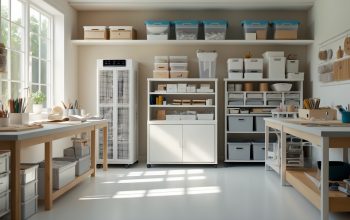
- Key Features: Shelving units, labeled bins, pegboards, drawers, vertical storage, clear containers.
- Tips: Store frequently used items at arm’s reach; seasonal or rarely used materials higher up or in deeper storage.
6. Cleanup & Maintenance Zone
- Purpose: Washing brushes, cleaning up spills, tool maintenance.
- Key Features: Sink (if possible), cleaning supplies, waste and recycling bins, tool tune-up kit.
- Tips: Keep this area near the entrance/exit for quick access after a session.
Planning Your Layout: Key Considerations
Assessing Your Space
Measure your room’s dimensions and note the location of doors, windows, outlets, radiators, and fixed furniture. Sketch a to-scale floor plan on paper or use a free online tool. Identify unused vertical space for potential storage. Even awkward corners can become productive zones with custom shelving or rolling carts.
Prioritizing Your Zones
- Which activities take up the most time or space?
- Do you need a large cutting table, or more storage for small supplies?
- Would a mobile workstation make sense for your workflow?
Rank your zones by importance and allocate space accordingly. If your projects are messy (e.g., resin, paint), plan for easy-to-clean surfaces and separation from clean zones.
Lighting and Electrical Access
Good lighting is essential for any craft. Plan for a mix of natural and task lighting. Position tables near windows when possible. Add plug strips or extension cords for tool-heavy zones, but avoid overloading outlets—use surge protectors and keep cords tidy to prevent tripping hazards.
Ventilation and Safety
If you use materials that emit fumes or dust, position work areas near windows, use fans or air purifiers, and keep fire extinguishers handy. Never block emergency exits with furniture or storage.
Storage Solutions for Every Studio Size
Vertical Storage
Maximize wall space with:
- Pegboards for hanging tools, scissors, and rulers
- Wall-mounted shelves for paint, jars, and bins
- Magnetic strips for metal tools and blades
Modular & Mobile Storage
Use rolling carts or modular drawers that can be repositioned by project. Stackable bins, caddies, and clear totes keep supplies visible and easy to grab. Label everything—investing a few minutes in labeling will save hours of searching later.
Hidden & Under-Table Storage
Add shallow drawers under worktables for flat tools or patterns. Use baskets or crates under tables for bulky items. Install hooks beneath shelves for hanging bags of fiber, cords, or ribbon spools.
Specialized Storage Ideas
- Thread racks for sewing studios
- Paint bottle organizers for art studios
- Drawer dividers for beads and jewelry findings
- Tall cabinets for large canvases or rolls of paper
Case Studies: Real Studio Layouts
Small Space, Big Impact: The Efficient Spare Bedroom
Profile: Paper crafter and hobby sewer in a 10×12 ft spare room.
- Desk by the window for planning and natural light
- Fold-down wall-mounted cutting table to maximize floor space
- Rolling cart with drawers for scissors, adhesives, and markers
- Pegboard above the table for tools
- Bookshelf with labeled bins for paper, fabric, and patterns
This crafter keeps clean/dirty workflow in mind: cutting and gluing happen at the table, finished pieces move to a drying rack on a nearby bookshelf, and a small waste bin sits under the work surface. The entire room resets in minutes thanks to easy-access storage.
Multi-Maker Garage Studio
Profile: Mixed media artist and woodworker sharing a single-car garage.
- Large central workbench for assembly
- Separate painting and staining zone near the garage door for ventilation
- Wall of shelving for paint, solvents, and wood off-cuts
- Heavy-duty pegboard for power tools and clamps
- Mobile cart for finishing supplies that can be wheeled outside
The garage layout emphasizes strong zoning: clean side for finishing, messy side for cutting and sanding, with a clear pathway for moving large projects in and out. A mini vacuum and air purifier help control dust.
Dedicated Art Studio Loft
Profile: Full-time painter in a 400 sq.ft. converted loft.
- Massive easel station facing north-facing windows for perfect light
- Sink and utility area tucked behind divider for brush cleaning
- Custom-built shelving for canvases and wet paintings
- Flat file drawers for paper and sketches
- Comfy chair and coffee table in one corner for inspiration breaks
This studio layout balances creative and practical needs, with defined zones for messier work, a storage wall for finished art, and a relaxing nook to recharge.
Step-by-Step: Designing Your Ideal Studio Layout
- Map Your Workflow. List your projects and break down steps. Draft a basic flowchart.
- Measure Your Space. Sketch a floor plan, marking outlets and obstacles.
- Define Your Zones. Place core zones on your plan based on workflow order.
- Choose Your Furniture. Opt for mobile, modular, or foldable pieces to maximize flexibility.
- Plan Your Storage. Assign shelves, drawers, and bins to each zone. Use vertical and under-table solutions.
- Test the Flow. Walk through a pretend project. Adjust layout for smoother movement and better access.
- Refine Lighting & Safety. Add task lights, route cords safely, and ensure good ventilation.
- Personalize & Inspire. Add color, a mood board, or display finished works to make the space your own.
Common Mistakes in Studio Layout (and How to Fix Them)
- Overcrowding. Don’t overload your space with too many tables or storage units—leave open areas for movement.
- Ignoring Workflow. Avoid random placement of zones—always position them in the logical order of your process.
- Underestimating Storage Needs. Plan for more storage than you think you’ll need—supplies multiply over time.
- Poor Lighting. Dim or uneven light strains your eyes and affects color accuracy. Use layered lighting.
- Neglecting Safety. Don’t block exits, overload outlets, or skip ventilation for messy work.
- Forgetting Comfort. Invest in an ergonomic chair or anti-fatigue mat for long sessions.
Adapting Your Layout Over Time
Your creative needs will evolve as you try new crafts, take on bigger projects, or share your space. Build flexibility into your layout by using rolling carts, foldable tables, and modular shelving. Set a reminder every few months to review what’s working and what isn’t. Don’t hesitate to rearrange zones or swap out storage to keep your studio functional and inspiring.
Conclusion
Designing the perfect DIY craft studio layout is a deeply personal journey, but the benefits are universal: better efficiency, less frustration, and a spark of joy every time you enter your creative space. By mapping your workflow, zoning your studio with purpose, and making storage work for you, you’ll create an environment that supports your passion and productivity. Remember, the ideal layout isn’t set in stone—it should grow and change with you, adapting to new projects, tools, and creative journeys. Even if you’re working in a small corner or a shared garage, thoughtful planning can transform any space into a powerhouse of inspiration and output. Don’t be afraid to experiment, tweak, and refine—every adjustment brings you closer to a studio that truly works for you. So grab your measuring tape, sketch your ideas, and start building a craft studio where your creativity can truly soar.

Could you give some examples of effective storage solutions for small spaces, especially when you have a lot of tiny supplies like beads or threads? I’m trying to keep everything accessible without making it feel cluttered.
For small spaces with lots of tiny supplies, try using clear stackable drawers or divided organizers so you can see everything at a glance. Wall-mounted pegboards with hooks and small bins work well for threads or bead containers. Magnetic strips for metal tools and over-the-door shoe organizers are also handy for keeping supplies sorted and easy to reach without creating clutter.
How do you suggest adapting your layout advice for a studio that shares space with a home office or other family activities, so things stay organized but flexible?
To keep your shared studio organized yet flexible, use mobile storage like rolling carts or baskets so supplies can be tucked away when not in use. Divide the space with shelves or folding screens to visually separate zones. Opt for collapsible or multi-use furniture, making it easy to switch between crafting and other household activities as needed.
The article mentions the importance of not backtracking during your creative process. What specific storage solutions have worked best to prevent constantly moving around for supplies in a small studio?
To minimize unnecessary movement in a small studio, consider using rolling carts for tools and materials you use most often, and wall-mounted shelves or pegboards to keep essentials within arm’s reach. Clear bins or drawer organizers help keep supplies sorted and visible right at your workstation, so you don’t need to cross the room repeatedly.
How long does it usually take to reorganize a craft space using the core principles you outlined? I want to try this but need to plan around my work schedule.
The time needed to reorganize your craft space depends on its size and how many supplies you have. For a small to medium room, applying the article’s core principles—sorting, zoning, and optimizing storage—usually takes a day or two. If you break it into steps, you could spend two or three evenings after work and still see great results.
I mostly work in a small spare bedroom, so dividing into zones gets tricky. Any advice on optimizing layout when my craft table has to double as assembly and finishing space?
In a small space, flexible organization is key. Use movable storage like carts or bins to keep supplies handy but out of the way when switching tasks. Assign each end of your table to a main activity (like assembly versus finishing), and tidy up between steps to clear space. Vertical wall storage can also free up valuable tabletop area.
What are some budget-friendly ways to set up functional studio zones if you’re just starting out or working in a temporary rental space?
To set up functional studio zones on a budget, try using foldable tables and stackable bins for flexible work areas and easy storage. Use inexpensive shelves or repurposed furniture to separate zones. Rolling carts are helpful for supplies and can move between tasks. Curtains or lightweight screens can create visual boundaries without permanent changes—perfect for rentals.
Could you expand on what kind of storage solutions keep frequently used tools at your fingertips? Are there budget-friendly ideas for those of us who don’t want to install a lot of permanent cabinetry?
Absolutely! Pegboards are fantastic for keeping tools visible and within easy reach, and they’re inexpensive to install. Rolling carts or tiered utility trolleys can also hold supplies and move wherever you need them. Magnetic strips, desktop caddies, and clear bins or baskets on open shelves are other affordable options that avoid permanent changes but keep essentials handy.
For someone making the jump from hobbyist to business, are there specific layout changes that help streamline production or presentation for customers coming into the space?
Transitioning to a business setup, it’s helpful to separate production and customer areas. Create a clear workspace for crafting, distinct from a tidy, inviting area for customer meetings or product displays. Use organized storage for materials and finished products, and ensure walkways are uncluttered so visitors can move around easily. This not only boosts efficiency but also gives customers a professional first impression.
Once I’ve identified my main project types, what’s a good way to test if my studio layout really improves efficiency before making permanent changes like mounting shelves or heavy furniture?
A practical way to test your layout is to use temporary markers or lightweight furniture to simulate your planned setup. Work on a few typical projects and note how easily you can access supplies and move between tasks. Make adjustments based on any challenges before committing to permanent changes.