Introduction: Why Chemical & Material Safety Matters in DIY Craft Studios
Setting up a craft studio isn’t just about creative freedom—it’s about creating a safe, inspiring environment that allows your creativity to flourish for years to come. If you work with paints, solvents, adhesives, resins, finishes, or other specialty materials, you’re handling chemicals that can pose health and environmental risks if used carelessly. From accidental skin contact and inhalation hazards to the risk of fire or improper disposal, neglecting chemical safety can threaten not only your projects but your well-being and even your home’s safety.
This comprehensive guide will walk you through the essentials of safe chemical and material handling in a DIY craft studio. Whether you’re an occasional painter, a dedicated resin artist, or a mixed-media enthusiast, you’ll discover practical strategies for smart storage, safe use, proper disposal, and everyday routines that keep you and your creative space protected. Let’s empower your creative journey with the knowledge and habits that make safety second nature.
Understanding Craft Studio Chemical Hazards
Common Chemicals and Materials in DIY Craft Studios
- Solvents: Acetone, mineral spirits, isopropyl alcohol
- Paints and Dyes: Acrylics, oils, spray paints, alcohol inks
- Adhesives: Epoxy, cyanoacrylate (super glue), hot glue
- Resins and Hardeners: Epoxy resin, polyester resin
- Finishes: Varnishes, polyurethane, shellac
- Cleaning Agents: Bleach, ammonia, specialty brush cleaners
Health and Environmental Risks
- Inhalation: Fumes from solvents, resins, and paints can cause headaches, dizziness, respiratory irritation, and long-term damage.
- Skin Contact: Direct exposure may cause rashes, burns, or allergic reactions.
- Fire and Explosion: Many materials are flammable or combustible.
- Environmental Impact: Improper disposal contaminates water and soil, harming wildlife.
Reading Safety Data Sheets (SDS)
Every chemical product should come with a Safety Data Sheet (SDS). These documents summarize hazards, safe handling, storage, and disposal. Download SDS sheets from manufacturer websites and keep a printed or digital copy accessible in your studio.
Smart Storage Solutions for Craft Chemicals
Choosing the Right Storage Location
- Ventilation: Store chemicals in a well-ventilated area, away from direct sunlight and heat sources.
- Temperature Control: Avoid extreme temperatures that may degrade or destabilize chemicals.
- Avoid Living Spaces: Never store hazardous materials in bedrooms, kitchens, or near children and pets.
Safe Storage Practices
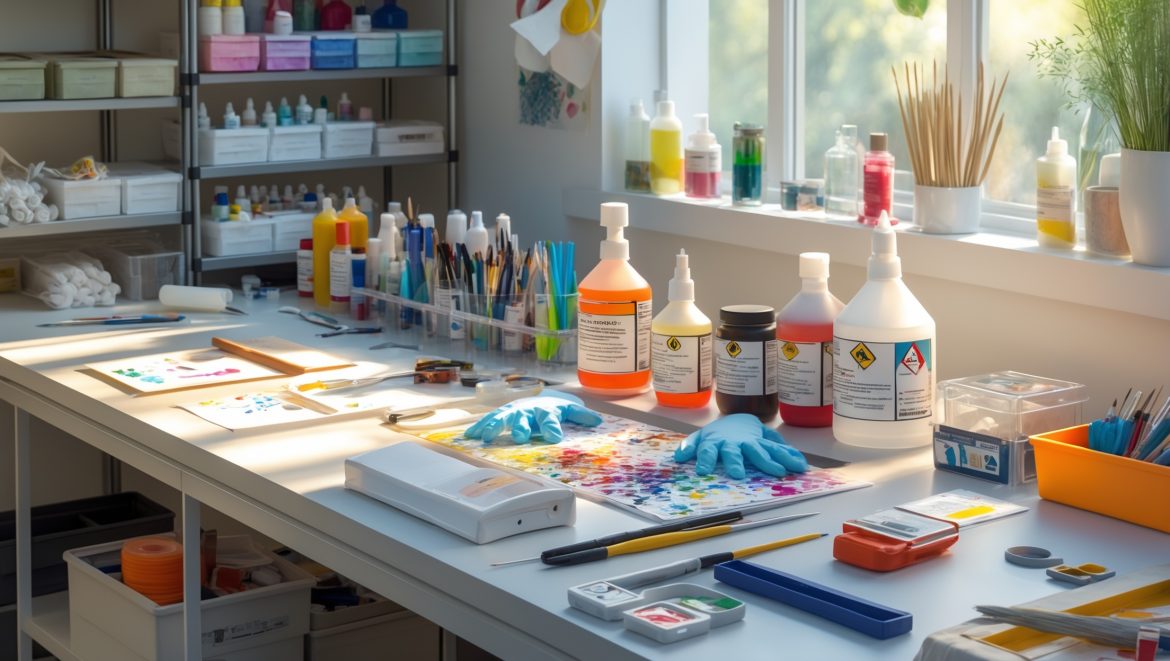
- Keep original labels intact and readable.
- Do not decant chemicals into food or drink containers.
- Group similar chemicals together (solvents with solvents, acids with acids), but keep incompatible materials separated (e.g., oxidizers away from combustibles).
- Use lockable cabinets or designated shelves for hazardous materials.
- Install spill trays or secondary containment under chemical storage areas to catch leaks.
Labeling and Organization
- Clearly label all containers with contents, hazard warnings, and purchase/open dates.
- Use color-coded bins or racks to quickly identify material types (e.g., red for flammables, blue for cleaning agents).
- Keep a manifest or inventory of all chemicals on hand, including quantities and expiration dates.
Personal Protective Equipment (PPE): The DIYer’s Safety Arsenal
Essential PPE for Craft Studios
- Gloves: Nitrile or chemical-resistant gloves for handling liquids and powders.
- Safety Glasses or Goggles: Protect eyes from splashes and dust.
- Respirators: Use NIOSH-approved masks (e.g., N95, organic vapor cartridges) when working with fumes or fine particulates.
- Aprons or Lab Coats: Protect clothing and skin from spills.
- Closed-Toe Shoes: Prevent foot injuries from spills or dropped tools.
Proper Use and Maintenance of PPE
- Inspect PPE before each use; replace damaged items promptly.
- Clean reusable equipment after each session; dispose of single-use items responsibly.
- Store PPE in a clean, dry place, away from chemicals.
Safe Chemical Handling: Step-by-Step Best Practices
Preparation Before Use
- Review the relevant SDS for each chemical or material.
- Set up your workspace with adequate ventilation—open windows, use exhaust fans, or work outdoors if possible.
- Lay out PPE and have spill cleanup materials (absorbent pads, paper towels, baking soda) within reach.
During Use
- Mix and dispense chemicals slowly, avoiding splashes or spills.
- Never eat, drink, or smoke while using chemicals.
- Keep containers closed when not in immediate use to reduce vapor exposure and accidental spills.
- Follow mixing ratios precisely, especially for resins and hardeners, to avoid hazardous reactions.
- Work with only the amount of material needed for your session to limit waste and reduce risk.
After Use
- Clean tools and surfaces promptly, following manufacturer instructions.
- Safely store leftover chemicals; never pour unused material back into the original container if it’s been contaminated.
- Wash hands and exposed skin thoroughly, even if you wore gloves.
Disposal of Craft Chemicals: Protecting People and the Planet
Why Proper Disposal Matters
Pouring solvents, paints, or adhesives down the drain or into the trash can pollute water supplies, harm wildlife, and create hazards for sanitation workers. Responsible disposal is an essential part of safe craft practice.
General Disposal Guidelines
- Never pour chemicals down household drains or outdoor storm sewers.
- Do not mix different chemicals together before disposal.
- Allow small amounts of water-based paints to dry in a well-ventilated area, then dispose of the solidified material in the trash (check local regulations).
- Collect solvent waste (used mineral spirits, brush cleaners) in clearly labeled, sealed containers for hazardous waste collection.
- Take expired or unused chemicals to a local hazardous waste facility or community collection event.
- Recycle empty, dry containers if permitted by your local recycling program; otherwise, dispose of them as hazardous waste.
Finding Local Hazardous Waste Disposal Options
- Contact your city or county’s environmental services department.
- Check for designated drop-off days or permanent collection centers.
- Some retailers (e.g., hardware stores) accept returns of old paint, batteries, or solvents under take-back programs.
Fire Safety in Chemical Storage and Use
Identifying Flammable Materials
- Look for hazard symbols (flame icon) and warnings on labels and SDS sheets.
- Common flammable craft studio items: spray adhesives, aerosol paints, alcohol inks, acetone, and some cleaning agents.
Reducing Fire Risks
- Store flammable materials in a dedicated, ventilated cabinet (preferably metal and fire-rated).
- Keep chemicals away from open flames, space heaters, and electrical outlets.
- Never smoke in the studio or near any chemical storage.
- Keep a Class B (flammable liquids) fire extinguisher accessible and ensure you know how to use it.
- Minimize the amount of flammable material stored at any one time.
Emergency Preparedness
- Post emergency contact numbers and procedures in a visible location.
- Have an evacuation plan and practice it periodically.
Ventilation: The Unsung Hero of Craft Studio Safety
Why Ventilation Matters
Effective ventilation controls airborne hazards, reduces inhalation risk, and helps prevent the buildup of flammable vapors. Even “low-odor” or “non-toxic” products can release potentially harmful fumes over time.
Practical Ventilation Solutions
- Work near open windows and doors whenever possible.
- Use portable exhaust fans to direct fumes outdoors.
- Install air purifiers with activated carbon filters for extra protection.
- Avoid using box fans that might recirculate air within the room without properly venting it outside.
Routine Studio Safety Checks and Good Habits
Weekly and Monthly Safety Routines
- Inspect all chemical containers for leaks, corrosion, or expired materials.
- Review inventory and dispose of unwanted products safely.
- Check and clean ventilation equipment and replace filters as needed.
- Test fire extinguishers and replace if expired or discharged.
- Confirm that PPE is in good condition and restock as necessary.
Developing a Studio Safety Culture
- Post safety reminders and quick-reference guides near your workspace.
- Share safety tips and resources with fellow DIYers and studio visitors.
- Stay informed about new materials, regulations, and best practices.
Special Considerations: Kids, Pets, and Shared Spaces
Keeping Vulnerable Individuals Safe
- Strictly prohibit unsupervised access to chemical storage areas.
- Lock up all hazardous materials and keep keys out of reach.
- Use childproof latches and safety locks where necessary.
- Clean up spills and residues immediately; never leave projects to cure within reach of children or pets.
Communicating Risks
- Clearly label work-in-progress items with drying or curing chemicals.
- Educate housemates and family about potential hazards and emergency procedures.
Conclusion: Creative Freedom Begins with Safety
Your craft studio is your sanctuary—a place where imagination takes shape. But creativity thrives best in an environment that’s as safe as it is inspiring. By mastering chemical and material handling, you not only protect your health and those around you, you safeguard your investment in your passion. The steps outlined in this guide are more than just rules—they’re habits that empower you to create with confidence, knowing you’ve minimized unnecessary risks.
Remember, safety isn’t a one-time checklist; it’s an ongoing practice. Regularly review your materials, update your knowledge, and make improvements as you grow in your craft. Encourage fellow DIYers to share in this culture of caution—it’s one of the best ways our creative community can support each other. With every project, you’ll not only produce beautiful work, but set a shining example of responsibility and care. Here’s to many more years of safe, joyful making in your DIY craft studio!