
Introduction
Every DIYer and crafter knows the difference between working in a gloomy corner and a well-lit studio. Lighting isn’t just about seeing what you’re doing—it profoundly affects your comfort, precision, color accuracy, and overall creative flow. Yet, many creative spaces are hampered by poor lighting setups: yellowed overhead bulbs, dark shadows, or harsh glare. The good news is that you don’t have to spend a fortune or call in an electrician every time you want to brighten your workspace. In this comprehensive guide, we’ll explore affordable, practical DIY projects to upgrade your craft studio lighting—without breaking your budget or sacrificing style. From strategic fixture swaps to ingenious lighting hacks, you’ll discover actionable steps to transform your creative space into one that inspires productivity and joy, no matter its size or natural light. Let’s shed some light on your next DIY project!
Understanding Craft Studio Lighting Needs
The Role of Lighting in Creativity and Comfort
Proper lighting is the unsung hero of any creative workspace. It reduces eye strain, minimizes mistakes, and allows you to work longer without fatigue. It also helps you see colors accurately—a must for painting, fabric work, and detailed craft projects. Whether you’re a jewelry maker, painter, or paper crafter, the right lighting setup can make the difference between a frustrating session and a productive one.
Types of Lighting to Consider
- Ambient Lighting: Overall room illumination, usually from ceiling fixtures or lamps.
- Task Lighting: Focused light for detailed work at your desk, table, or machine.
- Accent Lighting: Adds atmosphere and highlights specific areas or displays.
- Natural Lighting: Sunlight from windows or skylights, ideal for daytime crafting.
Assessing Your Current Lighting Setup
Identify Weaknesses and Opportunities
Before buying anything, spend time in your craft space at different times of day. Notice where shadows fall, which corners feel too dim, and whether your current lighting causes glare or headaches. Make note of:
- Areas where you struggle to see details clearly
- Color “hot spots” where light distorts your materials
- Under-lit storage or display zones
- Any fixtures that flicker, buzz, or heat up uncomfortably
Photograph your studio under existing lighting to objectively identify dark spots and color shifts.
Map Out Your Lighting Zones
Divide your studio into task areas (work tables, cutting stations, paint benches), storage, and ambiance zones. This will help you prioritize which areas will benefit most from upgrades and which can use creative low-cost fixes.
Budget-Friendly DIY Lighting Projects
1. Swapping Out Old Bulbs for Better Efficiency and Quality
The simplest and most effective upgrade is replacing outdated bulbs with modern LEDs. Choose bulbs with a high Color Rendering Index (CRI > 90) and a daylight color temperature (5000K–6500K) for the most accurate, vibrant light. LEDs use a fraction of the energy and stay cool—essential for small studios.
- Estimate cost: $5–$10 per bulb.
- Look for dimmable options to control brightness.
- Use smart bulbs if you want to adjust color temperature or use voice commands.
2. Installing Plug-in LED Task Lights
For areas where you need focused light—like your main work surface or sewing machine—clamp-on LED desk lamps or under-cabinet bars are game-changers. They’re affordable, easy to install (no wiring required), and positionable for minimal shadows.
- Estimate cost: $15–$40 per fixture.
- Look for models with flexible arms and adjustable heads.
- For wall-mounted options, use adhesive strips or simple wall anchors.
3. Creative Diffusers for Softer, Even Lighting
Harsh overhead lights can cause glare and hard shadows. Soften them with DIY diffusers:
- Stretch white fabric (like an old sheet) over cheap embroidery hoops and hang below the fixture.
- Clip parchment paper to bare bulbs (ensure safe distance from heat source).
- Upcycle translucent plastic containers as lamp shades for workbenches.
Always ensure adequate airflow and safe materials to avoid overheating.
4. Maximizing Natural Light
If you have windows, make the most of them:
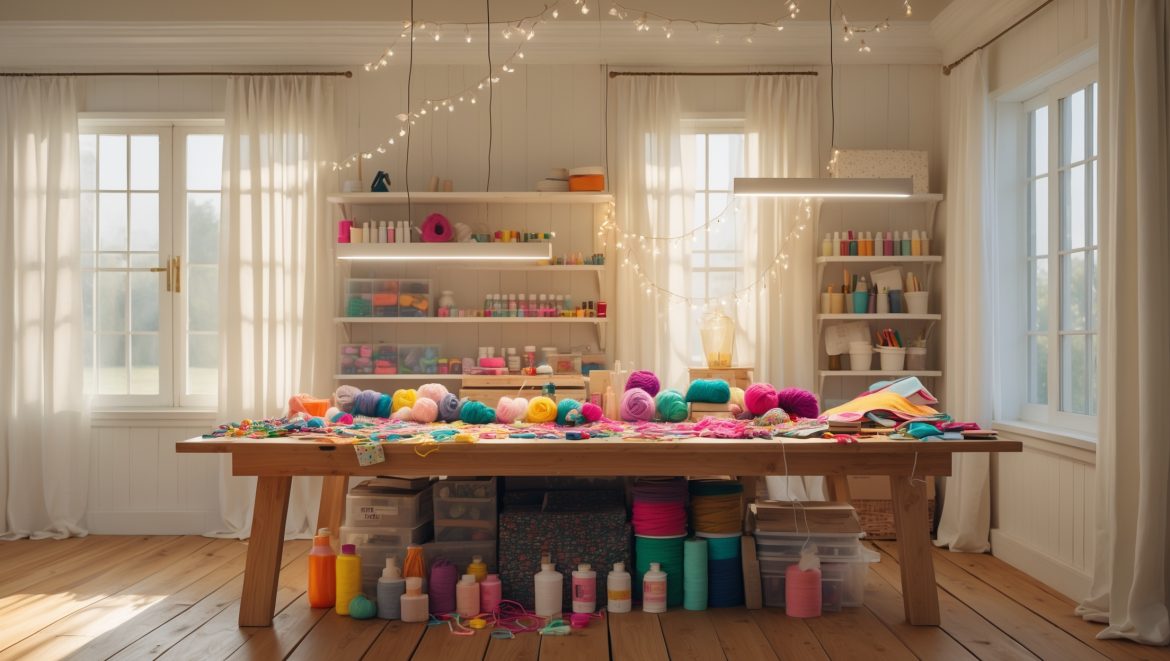
- Use sheer curtains to diffuse harsh sunlight while maximizing brightness.
- Place mirrors opposite windows to bounce daylight deeper into the room.
- Keep window sills clear of clutter.
- Arrange your main worktable to face or be adjacent to the strongest light source.
If privacy is a concern, try frosted window film—it lets in light while obscuring the view.
5. Adding Ambient Glow with String Lights and LED Strips
String lights and adhesive LED strips are affordable, flexible, and instantly boost mood. Use them to:
- Highlight shelves or display areas
- Frame bulletin boards or inspiration walls
- Add gentle background light for evening work
Choose warm white for a cozy feel, or daylight balanced for work zones. Most LED strips can be cut to length and plugged into a standard outlet or USB port.
6. DIY Overhead Fixtures
If your space lacks a central ceiling light—or it’s just ugly—try these renter-friendly upgrades:
- Hang a plug-in pendant lamp (available for $20–$40) with a decorative shade. Use a sturdy adhesive ceiling hook or wall bracket to secure the cord neatly.
- Cluster several paper lanterns for a sculptural effect and even light diffusion.
Always use lightweight shades and follow safety instructions for mounting and bulb wattage.
7. Portable Lighting Solutions
Battery-powered puck lights, clip-on lamps, and wireless LED bars are ideal for:
- Inside cabinets or closets
- Workshops without easy access to outlets
- Pop-up crafting at outdoor markets or events
Rechargeable models save on battery costs and are more eco-friendly.
Advanced DIY Projects for the Enthusiastic Crafter
Building a Custom Light Box
For artists, jewelry makers, or anyone photographing finished projects, a DIY light box offers professional-quality, shadow-free lighting for just a few dollars:
- Use a cardboard box lined with white poster board.
- Cut out sides and cover with white fabric or parchment paper for diffusion.
- Position inexpensive LED lights at the sides and top.
This setup is also useful for tracing, calligraphy, and other precision work.
Daylight Simulation for Windowless Studios
If your studio is in a basement or windowless room, invest in full-spectrum LED panels. Mount them on walls or ceilings to mimic daylight, improving mood and color perception. Add a timer to simulate sunrise and sunset for a natural rhythm.
- Panels start at $30–$50 each and can be wall-mounted with basic tools.
- Look for adjustable brightness to customize to your needs.
Lighting Placement and Layering Techniques
Eliminate Shadows and Glare
Position task lights so they shine from the opposite side of your dominant hand to avoid casting shadows. Overhead and side lights should be adjustable to reduce glare on shiny surfaces or screens. Test at night and during the day for consistency.
Layer Your Lighting
- Combine ambient, task, and accent lighting for flexibility. For example: a ceiling fixture for general light, an angled desk lamp for detail work, and LED strips to highlight materials or displays.
- Use dimmers or smart plugs to control intensity depending on the time of day or project type.
Budget Breakdown: What to Spend Where
Prioritize for Maximum Impact
- Bulb upgrades: $20–$50 for the whole room
- Task lighting: $20–$80, depending on number and type of fixtures
- Ambient/Accent (string lights, strips): $10–$40
- DIY diffusers/mirrors: $5–$30
- Advanced projects (light box, full-spectrum panels): $30–$100
Start with the area where you spend the most time, then expand as budget allows.
Safety Considerations and DIY Tips
- Always turn off and unplug fixtures before swapping bulbs or installing new lights.
- Use only bulbs and fixtures rated for your sockets and power supply.
- If running cords along walls or floors, use cord covers or tape to prevent tripping.
- Never overload power strips; use surge protectors where possible.
- Use non-flammable materials for DIY diffusers and shades.
If you need to hardwire a new fixture and aren’t comfortable with electrical work, hire a licensed electrician for that portion.
Maintenance and Ongoing Adjustments
Keep Your Lighting Performing Its Best
- Dust bulbs, lampshades, and fixtures monthly to maintain brightness.
- Check for flickering or dimming and replace bulbs promptly.
- Review your lighting as seasons change; you may need to adjust placement or intensity.
- Test color accuracy by comparing project work under studio lighting versus natural daylight.
Conclusion
Lighting is one of the most powerful, yet overlooked, tools in your creative arsenal. Upgrading your craft studio’s lighting doesn’t have to be expensive, complicated, or permanent. By thoughtfully layering ambient, task, and accent lights—and using clever DIY hacks to diffuse and amplify what you already have—you can transform your workspace, boost your productivity, and enjoy every crafting session even more. Start by observing your space, tackle the most critical zones first, and expand as your budget allows. The best lighting matches your workflow, supports your eyes and mood, and brings out the true beauty in everything you make. Don’t let poor lighting hold back your creativity—let these affordable projects illuminate your next masterpiece!
If my craft room doesn’t get any natural light during the day, which of the lighting types you mentioned should I prioritize to avoid eye strain and color distortion when painting?
For a craft room without natural light, prioritize full-spectrum LED bulbs or daylight-balanced fluorescent lamps. These options closely mimic natural daylight, helping you see true colors and reducing eye strain while painting. Make sure to use diffused overhead lighting combined with adjustable task lights for even coverage and flexibility.
What would you recommend as the first step if my room has no natural lighting at all? Should I prioritize ambient lighting or jump straight to task lamps?
If your room lacks natural light, it’s best to start with ambient lighting to create an even base level of brightness throughout the space. Once you have consistent ambient lighting, add task lamps where you work most to reduce shadows and eye strain. This layered approach will make your studio both comfortable and functional.
My workspace gets a lot of dark corners even with overhead lights. What are some quick lighting hacks from the article that can make an immediate difference without taking up a weekend to complete?
If you need quick fixes, the article suggests using adhesive LED strip lights under shelves or along walls to eliminate dark corners right away. Clip-on task lamps are another easy option to brighten specific areas. Both solutions require minimal setup, so you can improve your workspace lighting in less than an hour.
I’ve noticed my current overhead light casts really harsh shadows, especially when I’m doing detailed work like painting. Do you recommend swapping that for a different fixture, or should I just add some task lighting instead?
Adding task lighting is a practical and budget-friendly way to reduce harsh shadows, especially for detailed work. Adjustable lamps or LED strips placed near your work area can give you more control over light direction. However, if the overhead light is your main source, consider swapping to a fixture with diffused lighting for a softer, more even glow.
Could you share some tips on choosing affordable bulbs that still provide good color accuracy for detailed craft projects? I want to avoid yellow tones but not spend a ton.
Look for LED bulbs with a high Color Rendering Index (CRI) of 90 or above. Choose bulbs labeled as ‘daylight’ or with a color temperature between 5000K and 6500K to minimize yellow tones. These options are often affordable at big box stores or online. Avoid bulbs labeled as ‘soft white’ since they’ll cast warmer, yellowish light.
I have a small space with just one window that barely gets sunlight. Are there DIY lighting hacks specifically for areas with very limited natural light?
Absolutely, there are several DIY lighting hacks perfect for small, low-light spaces. You can use LED strip lights along shelves or under cabinets to add even, bright illumination. Installing a daylight-balanced LED bulb in a desk or floor lamp helps mimic natural sunlight. Reflective surfaces like whiteboards or aluminum foil panels can also help bounce light around the room, making the space feel brighter.
How much time do most of these DIY lighting upgrades take? I only have a couple of hours free on weekends and want to plan out what’s actually doable without turning my whole space upside down.
Most of the DIY lighting upgrades in the article can be completed within 1 to 2 hours, especially the simpler projects like adding LED strips or clip-on lamps. Larger changes, such as installing a new overhead fixture, might take longer but can usually be finished in half a day. If you focus on one upgrade per session, you can keep your space organized and manageable.
I’ve noticed some glare on shiny surfaces when I work at my desk. What are some DIY solutions from the article to reduce harsh glare without making the workspace too dim?
To reduce glare on shiny surfaces, the article suggests using diffusers made from materials like white fabric or parchment paper over your light sources. You can also reposition your lamps at angles to avoid direct reflection. Both methods help soften the light, making your workspace more comfortable without sacrificing brightness.
You mention affordable lighting hacks—could you give some ideas for renters who can’t install permanent fixtures but want to reduce dark shadows?
For renters, try using clamp lights with daylight bulbs that you can attach to shelves or furniture. Clip-on LED ring lights are another good option and can be moved around as needed. Positioning a couple of inexpensive floor or table lamps at different angles will also soften shadows without any permanent changes to your space.