
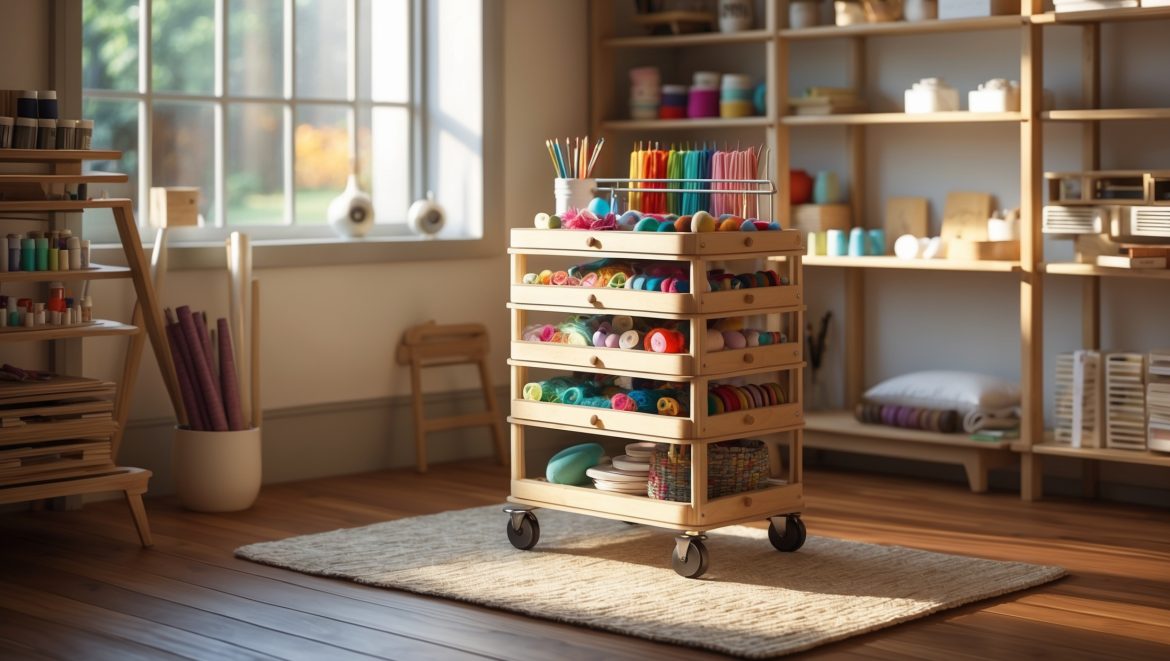
Introduction: The Small-Space Crafter’s Dilemma
For many creative enthusiasts, space is the ultimate luxury. Apartment dwellers, tiny-home owners, and those sharing living spaces often struggle to carve out a dedicated area for crafting. The result? Supplies stashed in closets, projects abandoned halfway, and more time spent hunting for tools than actually creating. But what if you could bring your entire studio to wherever inspiration strikes? Enter the mobile DIY craft cart—a compact, customizable, and flexible solution for organizing supplies and maximizing your creative potential, no matter how little room you have. This comprehensive guide will show you exactly how to plan, construct, and organize a mobile craft cart tailored to your needs, all while considering budget, material selection, essential tools, and smart organization strategies. Whether you’re a beginner or a seasoned maker, you’ll discover practical tips to help you streamline your workflow and reclaim your space for creativity.
Why a Mobile Craft Cart?
Traditional craft tables and permanent studios aren’t always feasible when you’re short on square footage. A mobile craft cart offers a host of benefits that make it a game-changer for small space crafters:
- Portability: Move your creative hub from room to room, or tuck it away when not in use.
- Organization: Designate spaces for each tool and supply, reducing clutter and wasted time.
- Customizability: Tailor shelves, drawers, and attachments to fit your unique craft projects and supplies.
- Space Efficiency: Utilize vertical space and compact footprints to make the most of every square inch.
Planning Your Mobile Craft Cart
Assess Your Crafting Needs
Start with a detailed inventory of the crafts you love and the supplies you use most. Are you primarily a paper crafter, a fiber artist, or a jewelry maker? Each specialty has its own storage and tool requirements. Make a list of your top-used items and categorize them by frequency of use and size.
- Essential Tools: Scissors, cutting mats, adhesives, rulers, etc.
- Bulk Storage: Yarn, fabric rolls, paper pads.
- Small Items: Beads, buttons, paint tubes.
Choose Your Cart Base
You have two main options: repurpose an existing rolling cart (like the IKEA RÅSKOG or similar) or build your own from scratch. Repurposing saves time and may cost less, but building allows for total customization. Consider these features:
- Sturdy Frame: Metal or solid wood for durability.
- Lockable Casters: To keep the cart steady while in use.
- Adjustable Shelving: For flexible storage as your needs change.
- Compact Footprint: Ideally, no wider than 18-24 inches to navigate tight spaces.
Budgeting and Sourcing Materials
Craft carts can be built for as little as $40 (basic repurposed models) or as much as $200+ (custom wood builds with premium hardware). Here’s a sample breakdown:
- Cart Base (repurposed): $30–$70
- Custom Wood & Hardware: $60–$120
- Casters: $10–$30
- Organizer Bins/Trays: $10–$50
- Paint/Finishing Supplies: $10–$25
- Total (average): $80–$180
Check local hardware stores, thrift shops, and online marketplaces for deals. Repurposing shelves, drawers, and containers can further reduce costs.
Essential Tools & Supplies for Construction
Before you begin, gather the necessary tools and construction materials. Here’s a core list:
- Power Drill with drill and screwdriver bits
- Hand Saw or Circular Saw (if building from wood)
- Measuring Tape and Ruler
- Level
- Wood Screws or Bolts (appropriate for your material)
- Sandpaper or Power Sander
- Paintbrushes or Foam Rollers (for finishing)
- Protective Gloves and Safety Glasses
- Pencil and Marking Tools
Designing Your Cart: Features That Matter
Space Optimization
Think vertically! Multi-tiered designs make the most of limited floor space. Prioritize adjustable shelves to accommodate both tall and short items. Consider incorporating:
- Hooks: For hanging scissors, rotary cutters, or measuring tapes.
- Drawer Units: For small, loose items like beads or needles.
- Magnetic Strips: To hold metal tools conveniently on the side.
- Side Baskets: For quick-access supplies like pens and brushes.
Ergonomics & Accessibility
Keep your most-used items at waist or hand level. Heavy items should be stored at the bottom for stability. Plan for ample clearance between shelves to avoid “stacking” and hiding supplies.
Mobility & Stability
Choose casters rated for your cart’s estimated weight. Swivel casters provide better maneuverability, while two locking wheels keep the cart stationary during use.
Step-by-Step Build: Assembling Your Mobile Craft Cart
1. Preparing the Frame
- If repurposing a cart, clean and sand surfaces for paint or finish adhesion.
- If building from scratch, cut wood panels to desired shelf size (common: 18″x12″ for three tiers). Sand all edges for safety.
2. Attaching Casters
- Pre-drill holes in each corner of the cart base.
- Secure casters with bolts and washers. Test to ensure all wheels rotate smoothly and lock as intended.
3. Assembling Shelves
- Attach vertical supports (metal or wood legs) to the base and then to each shelf using wood screws or bolts.
- Use a level to ensure each shelf sits flat. Tighten all fastenings securely.
4. Finishing Touches
- Apply paint, stain, or sealant for durability and style. Allow to dry completely.
- Add hooks, magnetic strips, and side baskets as desired. Use screws or heavy-duty adhesive for secure attachments.
Organizing Your Craft Cart: Smart Storage Solutions
Modular Containers
Choose transparent bins, stackable trays, and drawer organizers that fit snugly on each shelf. Label everything clearly to save time during projects.
Vertical Dividers
Install vertical dividers or file sorters to keep papers, vinyl sheets, and cutting mats upright and accessible.
Tool Holders and Caddies
Attach caddies or cups to the sides for pens, brushes, and scissors. Use a pegboard panel on the side for ultra-flexible organization.
Cord and Battery Management
For electronic tools, use cable clips and a small power strip mounted under a shelf. Store batteries in a dedicated, clearly marked container.
Maintaining and Upgrading Your Mobile Craft Cart
Regular Cleaning
Wipe down shelves weekly to remove dust and stray glitter. Check for loose screws or worn casters every few months and tighten or replace as needed.
Seasonal Reorganization
At the start of each season, review your cart’s setup. Remove rarely used items to free up space for upcoming projects. Re-label containers if your crafting focus shifts.
Upgrades and Adaptations
- Add lighting: Clip-on LED lamps can brighten your workspace, especially in dim rooms.
- Install a fold-down work surface: Attach a hinged board to one side for extra project space when needed.
- Upgrade to soft-close drawers or higher-capacity casters as your supply collection grows.
Safety Considerations
Even compact carts require safe construction and usage practices:
- Never overload shelves beyond their rated capacity.
- Keep heavy items on the lowest tier to prevent tipping.
- Ensure all attachments are flush and secure to avoid snagging clothing or injury.
- If using sharp tools or chemicals, store them in lockable drawers or containers, especially if children or pets are present.
Case Study: Real-Life Mobile Craft Cart Setups
The Paper Crafter’s Cart
Olivia, a cardmaker in a 500 sq. ft. apartment, transformed a three-tier kitchen trolley into a craft cart. She added magnetic strips for metal dies, vertical file holders for cardstock, and shallow bins for ink pads. The top shelf houses her die-cutting machine, while the lowest tier stores bulk envelopes and paper trimmers.
The Multi-Media Maker’s Cart
James, who alternates between painting and jewelry making, built a custom wood cart with a pegboard side for brushes and pliers. Modular bins on each shelf keep paint tubes and bead organizers separated. A clip-on lamp and removable work tray round out the setup for flexibility.
Frequently Asked Questions
- Can I use a metal cart in a humid environment? Yes, but apply a rust-resistant finish and avoid storing water-sensitive materials directly on the metal.
- What’s the best way to child-proof a craft cart? Opt for lockable drawers and avoid hanging sharp tools or hazardous supplies on accessible sides.
- How do I prevent the cart from scratching my floors? Use soft rubber casters and routinely check for debris caught in wheels.
Conclusion: Unlock Creative Freedom with Your Mobile Craft Cart
Building a mobile DIY craft cart is more than a practical project—it’s an investment in your creative routine and your living space. By consolidating your supplies, tools, and workspace into a single, movable station, you unlock the flexibility to craft anywhere inspiration strikes. No more cluttered kitchen tables or forgotten supplies tucked away in drawers; everything you need is at your fingertips, organized exactly as you like it. Whether you choose to repurpose an existing cart or craft one from scratch, the process empowers you to assess your needs, flex your DIY skills, and create a tailored solution that evolves with your projects. Regular upkeep and thoughtful upgrades will keep your cart—and your creativity—rolling for years to come. So go ahead: reclaim your space, streamline your workflow, and make creativity a seamless part of your everyday life, no matter how small your home may be.


When considering materials for building the craft cart, do you recommend going with lightweight wood like pine, or would metal framing be sturdier for moving it around apartments with tight corners?
For a mobile craft cart in small apartments, lightweight wood like pine is generally a good choice—it’s easy to work with, lighter to move, and still sturdy enough for most craft supplies. Metal framing offers extra durability, but it can be heavier and harder to maneuver in tight spaces. Pine strikes a nice balance between mobility and strength for this project.