
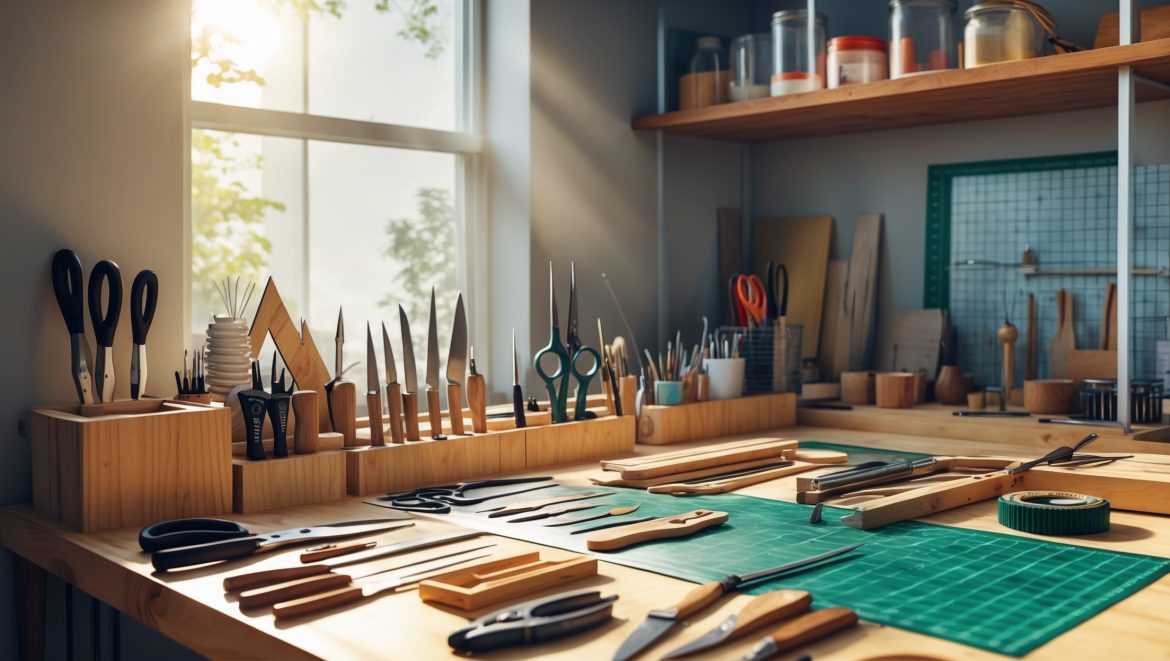
Introduction: Building Your DIY Craft Toolkit Wisely
Stepping into the world of DIY crafts is exhilarating—your creativity knows no bounds, and the possibilities are endless. Yet, nothing kills that initial spark faster than being bogged down by the wrong tools: cheap scissors that tear instead of cut, gadgets that gather dust, or missing essentials that stall your projects. Whether you’re assembling a dream craft studio or simply looking to enhance your creative corner, knowing which hand tools truly matter (and which are overhyped) can save money, time, and frustration. This guide is designed for passionate DIYers, hobbyists, and aspiring craftpreneurs alike. We’ll break down the hand tools every craftsperson should own, help you spot quality, recommend smart upgrades, and shine a light on trendy tools that rarely justify their hype. With a focus on versatility, durability, and safety, you’ll be empowered to make informed choices, invest wisely, and set yourself up for years of joyful making. Let’s separate the must-haves from the nice-to-haves and skip the clutter—your creative journey deserves a toolkit as inspired as your imagination.
Why the Right Tools Matter: Efficiency, Safety, and Results
A thoughtfully curated toolkit is more than just a collection of objects—it’s the backbone of your creative process. The right hand tools speed up your workflow, ensure precision, and keep you safe. Poor-quality or unnecessary tools, on the other hand, can lead to frustration, wasted materials, and even injury. Here’s why it pays to invest in the essentials:
- Reliability: Quality hand tools perform consistently, reducing mistakes and rework.
- Safety: Well-made tools are less likely to break, slip, or cause accidents.
- Cost-Effectiveness: Buying the right tools once is cheaper than replacing cheap or unsuitable items.
- Space Management: Fewer, multi-functional tools mean less clutter and more workspace.
The Must-Have Hand Tools for Every DIY Crafter
Across all DIY disciplines—paper crafts, jewelry making, sewing, upcycling, home décor, and more—certain hand tools prove indispensable. Here’s what belongs in every creative toolkit, with details on choosing wisely.
1. Precision Scissors (and Why You Need More Than One Pair)
No tool gets more use in a craft space than scissors. Invest in at least two pairs:
- Fabric Scissors: Reserved exclusively for textiles. Look for stainless steel blades, comfortable handles, and a smooth, long cut. Never use them on paper—this dulls the blades.
- All-Purpose Craft Scissors: For paper, ribbon, light cardboard, and general tasks. Choose a sharp, mid-sized pair with ergonomic grips.
Bonus: Consider a pair of detail snips for intricate work, like cutting threads or tiny shapes.
2. Craft Knife or Precision Cutter
For clean, accurate cuts in paper, foam, vinyl, or thin plastics, a craft knife (like an X-Acto) is a must. Look for:
- Replaceable blades
- Comfortable, non-slip handle
- Safety cap for storage
Always use with a self-healing cutting mat to protect your work surface and extend blade life.
3. Self-Healing Cutting Mat
This unsung hero keeps your blades sharp and your table unscathed. Choose a mat at least A3 size for versatility. Look for:
- Clearly marked gridlines for measuring and alignment
- Triple-layer construction for durability
4. Metal Ruler (with Cork Backing)
Plastic rulers warp and chip; metal ones last. A 12- to 18-inch metal ruler with a cork backing prevents slipping and protects delicate surfaces. Bonus: doubles as a straightedge for cutting.
5. Pliers Set (Needle-nose, Flat-nose, Round-nose)
Essential for jewelry making, wire work, and mixed-media crafts. A starter set should include:
- Needle-nose pliers: For gripping, bending, and reaching into tight spaces
- Flat-nose pliers: For holding and flattening wire or metal findings
- Round-nose pliers: For forming loops
Look for padded grips and spring-loaded handles for comfort during repetitive tasks.
6. Wire Cutters
Don’t ruin your scissors—use dedicated wire cutters for jewelry wire, floral wire, or thin metal. Choose a pair with sharp jaws and a comfortable grip.
7. Assorted Paintbrushes
A basic set of synthetic brushes in various shapes (flat, round, angled) covers most painting, stenciling, and glue application needs. Clean promptly for longevity.
8. Craft Tweezers
For picking up small embellishments, beads, or delicate paper pieces. A fine-point, anti-static pair is ideal for precision tasks.
9. Awl or Hole Punch
An awl is invaluable for starting holes in leather, cardboard, or thick papers. For uniform holes, invest in a rotary paper punch or a multi-sized hole punch.
10. Glue Applicators (Beyond the Glue Gun)
While hot glue guns are popular, keep:
- Fine-tip glue bottles for liquid adhesives
- Glue sticks for paper crafts
- A palette knife or old credit card for spreading glue evenly
How to Spot Quality: Features That Matter
Not all hand tools are created equal. Here’s what to check before you buy:
- Build Material: Stainless steel, solid metal, or heavy-duty plastics last longest.
- Ergonomics: Comfortable grips and balanced weight prevent fatigue and injury.
- Brand Reputation: A reliable brand often means better quality control and support.
- Replaceable Parts: Tools with replaceable blades, tips, or springs save money long-term.
- Warranty: A satisfaction guarantee or manufacturer’s warranty is a sign of trustworthiness.
Tools to Skip: Overhyped Gadgets and Single-Use Gimmicks
Not every tool trending on social media deserves a place in your studio. Here are common culprits:
- Mini Irons: Unless you’re quilting professionally, a regular iron or heat press suffices.
- Specialty Punches for Every Shape: A few basic shapes are fine, but most end up unused. Consider digital cutting machines if you need variety.
- “Magic” Cutting Gadgets: Devices promising to cut, score, emboss, and more often underperform and can’t match the versatility of a craft knife plus ruler.
- Cheap Multi-Tools: 5-in-1 gadgets typically do nothing well. Invest in dedicated, high-quality tools instead.
- Unnecessary Duplicates: Resist the urge to buy every scissor or plier style unless you have a specific need.
Ask yourself: Will this tool save me significant time or effort on my regular projects? If not, skip it.
Smart Upgrades: When to Invest in Pro-Level Tools
Once you’ve mastered the basics and find yourself creating regularly, it may be time to upgrade. Consider pro-level tools if you:
- Notice your current tools wearing out quickly
- Experience hand fatigue after long sessions
- Are selling your crafts and need consistent, professional results
Examples of smart upgrades include:
- Self-sharpening rotary cutters for fabric and paper
- Heavy-duty hole punches and eyelet setters
- High-precision jewelry pliers with lap-jointed construction
Essential Accessories for Safer and More Efficient Crafting
- Protective Gloves: For hot glue or sharp tools
- Safety Glasses: Especially when cutting wire or using powerful adhesives
- Magnifying Lamp: For detailed work and reducing eye strain
- Storage Solutions: Tool caddies, magnetic strips, or drawer organizers keep essentials within reach
Maintenance Tips: Keeping Your Hand Tools in Top Condition
A little care goes a long way in prolonging the life of your toolkit:
- Wipe blades and metal parts after use to prevent rust
- Sharpen scissors and craft knives regularly
- Tighten loose screws or joints as needed
- Store tools in a dry, organized space
- Replace worn-out or damaged tools promptly to prevent accidents
Personalizing Your Toolkit: Adapting Essentials to Your Craft
Your toolkit should reflect your favorite mediums and projects. For example:
- Sewists: Add seam rippers, fabric markers, measuring tapes
- Jewelry Makers: Invest in bead reamers, crimping pliers, and mandrels
- Paper Crafters: Include bone folders, embossing styluses, and scoring boards
- Mixed Media Artists: Consider palette knives, sponges, and texture tools
Start with the basics, then layer on specialty tools as your skills and interests evolve.
Conclusion: Build, Refine, and Enjoy Your Ultimate DIY Toolkit
Crafting is most enjoyable when your tools work with you, not against you. By investing in essential, high-quality hand tools—and resisting the siren call of single-use gadgets—you set yourself up for creative success, no matter your discipline. Remember, the best toolkit is not the biggest or the trendiest, but the one tailored to your needs, budget, and ambitions. Each tool should earn its space by bringing value to your projects, be it through precision, comfort, or versatility.
Take time to maintain your collection, upgrade thoughtfully as your skills grow, and don’t be swayed by every new product on the market. A well-chosen toolkit will empower you to tackle new techniques, experiment fearlessly, and bring your ideas to life with confidence. Whether you’re crafting for pleasure, profit, or both, the right hand tools are your creative partners. Equip yourself wisely, and let your imagination take the lead—your craft journey will thank you for years to come.
For someone just getting started on a budget, what’s your advice on which essentials to invest in first versus which ones can wait without compromising safety or results?
For beginners on a budget, start with a good tape measure, utility knife, hammer, screwdrivers (flathead and Phillips), and a pair of pliers. These cover most basic tasks safely. Tools like specialty saws, clamps, or levels can usually wait until you tackle more complex projects. Always prioritize quality over quantity for long-term results.
If I’m working with a pretty limited workspace, which three hand tools would you recommend as the most essential for all-around DIY crafting?
With limited workspace, a good multi-bit screwdriver, a quality pair of needle-nose pliers, and a retractable utility knife would be most versatile. These three cover most basic tasks like cutting, tightening, loosening, and gripping, all while taking up minimal space.
I’ve invested in some trendy craft gadgets before that ended up collecting dust. Can you give examples of overhyped hand tools I should definitely avoid as a beginner?
Absolutely, it’s easy to get caught up in the latest gadgets. As a beginner, you can skip single-purpose tools like fancy paper cutters with specialty blades, hot glue guns with multiple heat settings, and mini rotary tools unless you have a specific use in mind. Stick with versatile basics like scissors, a simple glue gun, and a sturdy ruler until you know what you’ll use most.
I’m working with limited space in my apartment. Could you give examples of multi-functional hand tools that actually live up to the hype and help minimize clutter?
For small spaces, consider a high-quality multi-bit screwdriver, which lets you swap bits for various screws. An adjustable wrench can handle different bolt sizes, replacing an entire wrench set. A compact hammer with a built-in nail puller and a foldable utility knife with extra blades are also practical, space-saving choices that perform multiple jobs well.
I’m curious how often you reassess your toolkit as trends in DIY crafting change. Is it worth revisiting your collection every year, or do the basics truly stay the same regardless of new products on the market?
It’s a good idea to review your toolkit every year or so, especially if you notice new techniques or materials gaining popularity. However, the basics—like quality scissors, measuring tape, and a reliable glue gun—tend to remain useful no matter the trends. Only upgrade or add tools if they genuinely match your evolving projects.
If I’m setting up a DIY craft space on a tight budget, which must-have hand tools from your list would you prioritize buying first?
If you’re working with a tight budget, start with a good pair of scissors, a utility knife, a measuring tape, and a multi-bit screwdriver. These are versatile tools that cover most basic crafting needs. You can add specialty items like a hot glue gun or cutting mat later as your projects grow.
Could you elaborate on what makes a pair of scissors ‘quality’ for crafting purposes? I often find mine dull quickly or don’t cut well through thicker materials, and would appreciate tips for choosing the right brand or features.
For crafting, quality scissors should have sharp, stainless steel blades that stay sharp over time, especially if you cut thick materials like felt or cardboard. Look for comfortable, ergonomic handles and consider brands known for durability, like Fiskars or Gingher. Some crafters keep separate scissors for fabric and paper to preserve sharpness. A sturdy feel and smooth cutting action are good indicators of quality.
You mention that poor-quality tools can cause injury. Are there specific warning signs I should look out for when shopping for safe hand tools?
Absolutely, there are a few warning signs to watch for. Avoid tools with loose or wobbly parts, rough or splintered handles, and uneven or poorly finished surfaces. If the tool feels unbalanced, flimsy, or the moving parts stick, it may not be safe. Check that all components are firmly attached and the tool feels comfortable in your grip.
You mention the importance of investing in reliable hand tools for both safety and efficiency. Are there specific brands or features I should look for when buying basic tools like scissors and pliers to avoid wasting money on low-quality ones?
When buying scissors and pliers, look for brands known for durability, such as Fiskars for scissors and Knipex or Irwin for pliers. Features like ergonomic handles, stainless or high-carbon steel blades, and a solid joint (no wobbly parts) are important. Also, consider how comfortable they feel in your hand, as comfort contributes to both safety and precision.
I’ve run into safety issues with some cheap tools before. Are there any must-have tools you’d suggest always skipping unless you can buy a higher quality version?
It’s wise to be cautious with certain tools. Items like utility knives, pliers, and measuring tapes are best bought from trusted brands since cheap versions can be unsafe or unreliable. Also, avoid low-quality screwdrivers and saws—they can break or slip, causing injuries. For these essentials, investing in higher quality pays off in safety and performance.
If I’m starting from scratch on a college budget, which three hand tools should I prioritize buying first before others and why?
If you’re just starting out and want to keep costs down, I’d suggest prioritizing a good quality tape measure, a multi-bit screwdriver, and a pair of needle-nose pliers. These three tools cover basic measuring, fastening, and gripping tasks, making them versatile for nearly any beginner DIY project.
You mention skipping trendy tools that usually don’t justify the hype—could you give some concrete examples of which popular hand tools fall into this category and why they’re not worth buying for most DIY crafters?
Some popular hand tools that often don’t live up to the hype for most DIY crafters include specialty multi-angle measuring gadgets, electric scissors, and automatic nail setters. These tools may seem convenient, but basic measuring tapes, regular scissors, and traditional hammers usually get the job done just as well and are more versatile, saving you money and storage space.
I’ve experienced frustration in the past with tools breaking during projects. What signs should I look for when shopping to make sure I’m choosing safe, reliable hand tools, especially as a small business owner?
When choosing hand tools, check for sturdy, well-finished materials—solid steel construction and comfortable, non-slip grips are good signs. Test moving parts for smooth operation, and look for reputable brands or tools that meet safety standards. Avoid bargain-bin tools with flimsy plastic parts or obvious defects. Investing a bit more up front can save a lot of hassle for your business down the road.